Why Does My Flat Roof Pond Water After a Storm in Bay City
Standing water on a flat roof often points to blocked drains, low spots, or a sagging deck. Learn what causes ponding and how to stop repeat leaks in Bay City.
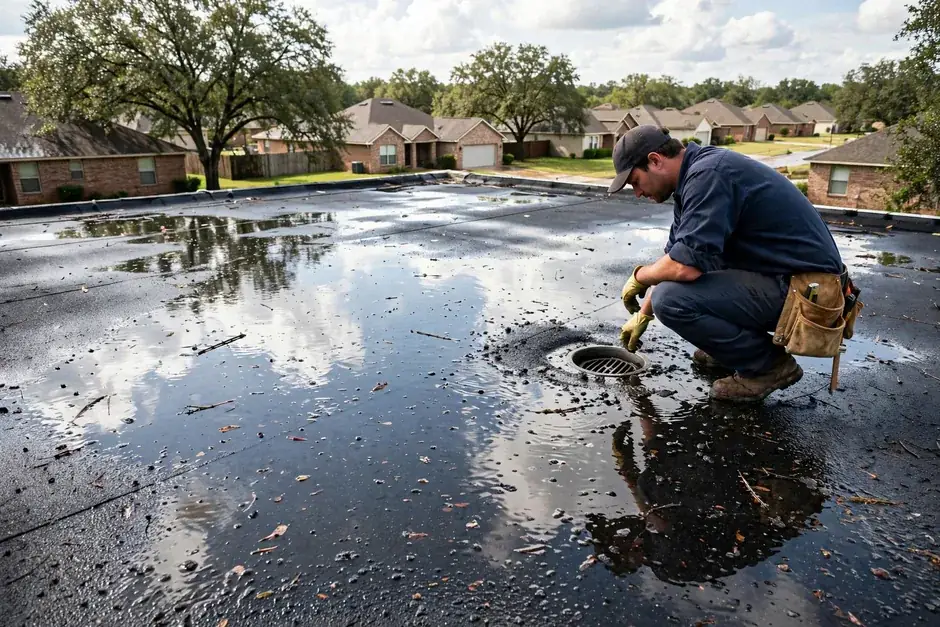
A flat roof ponds water after a storm when the roof surface or drainage system cannot move rain to an outlet quickly enough; common causes include a clogged drain, a low spot, or a sagging deck. If the water remains more than 48 hours after rainfall ends, the roof needs attention, because continued loading and membrane exposure can turn a drainage defect into a leak. We help Bay City property owners identify the cause rather than simply cover the puddle. This guide explains what is normal, what to inspect safely from the ground, and which repairs address the underlying problem.
Why does my flat roof pond water after a storm in Bay City, Texas is a question we hear after heavy rain, especially when a familiar puddle keeps returning in the same place. Bay City's storms can deliver intense rainfall in a short period, so drains, scuppers, and roof slopes need to carry water away without obstruction. Flat roof ponding water Bay City TX is standing water that remains after drainage should have cleared the roof.
Our team checks the roof surface, outlet openings, seams, and structure to find the source. For broader roofing needs, our Roofing Repair, Roof Replacement, Roof Leakage Repair in Bay City, Texas work includes tracing water entry back to its cause, not just treating the stain indoors.
Why Does My Flat Roof Pond Water After a Storm in Bay City, Texas?
A flat roof in Bay City, Texas ponds after a storm when water cannot reach a functioning drain or scupper because of blockage, inadequate slope, membrane deformation, or structural movement. The same puddle returning after each storm is a useful clue: water is following a low path and stopping at a low point.
"Flat" roofs are not meant to be perfectly level. They are built with a slight slope-often about 1/4 inch per foot in drainage design-so water moves toward drains or roof edges. If debris blocks that route, or the slope has settled, rain collects instead. A sagging section can also create a bowl that holds water even when the drain itself is clear.
Start with what you can observe from a safe location. Note where the puddle forms, how wide it is, and whether water clears within two days. Look for interior ceiling discoloration after the storm, but do not walk on a wet roof; membrane surfaces become slippery, and concealed decking damage can make them unsafe.
How Long Should Water Remain on a Flat Roof?
Water should drain from a flat roof in Bay City within 24 to 48 hours after rain stops; standing water beyond 48 hours is a sign to investigate drainage or roof slope. A short-lived film after a downpour is different from a persistent puddle that remains deep enough to reflect the sky the next day.
One inch of rain over 1,000 square feet weighs about 5,200 pounds before it drains. A roof is designed to carry expected rain loads, but a clogged outlet or structural dip concentrates water where it should not collect. Repeated ponding also exposes seams and flashing to long periods of moisture and heat.
Track the water after a storm rather than judging it while rain is still falling. If the puddle shrinks steadily and disappears within 48 hours, the roof may simply be handling a heavy burst of rain. If it does not change, or if the same area stays wet between storms, arrange an inspection.
What Causes Flat Roof Drainage Problems in Bay City?
Flat roof drainage issues in Bay City, Texas most often come from blocked outlets, incorrect or settled slope, damaged membrane, and roof framing that has deflected under repeated load. In areas with mature trees or storm-blown debris, leaves and twigs can collect at drains and scuppers faster than you might expect.
We look for several specific failure points during an inspection: a drain basket packed with leaves, a scupper opening narrowed by debris, a crushed or disconnected leader, open membrane seams, and depressions that hold water. Around Downtown Bay City, older low-slope buildings can have roof sections added over time, creating changes in height that interrupt drainage. Where a leak is already visible, roof leak repair in Bay City, Texas starts with tracing the water path rather than assuming the ceiling stain marks the roof opening.
Wind-driven rain can also expose weak details around vents, curbs, and rooftop equipment. A roof may pond in one area and leak several feet away because water travels beneath the membrane before it finds a seam or penetration. That is why the wet spot indoors does not always line up with the outdoor puddle.
- Blocked drainage: debris prevents water from reaching an outlet.
- Low or settled areas: poor slope or movement creates a basin.
- Membrane damage: splits, open seams, or failed flashing let trapped water in.
- Structural deflection: a roof deck bends or weakens, deepening the low spot.
How to Fix Ponding Water on a Flat Roof
Fixing ponding water on a flat roof in Bay City starts by clearing and testing the drainage path, then correcting the low spot or damaged membrane that keeps water from leaving. The right repair depends on whether the problem is a simple obstruction, a failed roof detail, or a slope and structural issue.
For a blocked drain, we remove debris, check the drain bowl and outlet, and confirm that water can flow away. If the membrane has a puncture or failed seam, we clean and prepare the area, install a compatible patch or seam repair, and check nearby flashing. Patching a low spot without improving drainage usually leaves the puddle in place.
Where the roof surface has a shallow depression, a roofing professional can use a compatible tapered system or other manufacturer-approved correction to guide water to the drain. A widespread or deep sag calls for a closer structural assessment; adding heavy fill is not a sound fix. If the membrane has widespread deterioration, repeated repairs may cost more over time than replacing the affected roof section.
Our flat roof repair in Bay City, Texas addresses ponding at the source, including membrane failures and drainage details. After the repair, we verify the route water should take and inspect the area for openings that could admit wind-driven rain.
Common Mistakes That Make Ponding Worse
Common flat roof mistakes in Bay City include sealing a puddle without fixing drainage, using incompatible patch material, and walking across a saturated roof to inspect it. Each can hide the real issue or cause additional damage.
Roof cement or silicone smeared around a drain may appear to stop a leak, but it can obstruct the opening or fail to bond with the existing membrane. Likewise, adding gravel, pavers, or loose fill to a low spot adds weight without creating a reliable slope. A coating is not a substitute for fixing a blocked drain or correcting a structural depression.
Do not assume that every puddle means the whole roof needs replacement. One clogged outlet can create a serious-looking pool, while a widespread pattern of standing water can point to deeper problems. The best diagnosis distinguishes between a maintenance issue and a failing roof system.
Keep these practical points in mind:
- Do not puncture the membrane with tools while clearing debris.
- Do not pressure-wash roof drains or seams; forceful water can drive moisture beneath the membrane.
- Do not ignore a ceiling stain just because the puddle has drained.
- Keep a simple record of storm dates, puddle duration, and any interior changes.
What Does Flat Roof Drainage Repair Cost in Bay City?
Flat roof drainage repair in Bay City, Texas, typically costs about $150-$500 for a straightforward drain cleaning, $300-$1,200 for a localized membrane or flashing repair, and $1,000-$5,000 or more for substantial slope correction or structural work, based on typical 2026 pricing in this area. Roof size, access, membrane type, and the extent of hidden damage change the final cost.
A routine service call to clear one accessible drain sits at the lower end of the range. Repairing a seam, curb, or small damaged area takes more preparation and compatible materials. Rebuilding slope across a broad roof section costs more because it can involve removing and reinstalling membrane layers; structural repairs require additional assessment.
When we inspect a roof, we identify the drainage route and separate a maintenance fix from a repair that addresses recurring ponding. We provide upfront pricing before the work begins, so you can compare a targeted repair with replacement when the membrane or deck has widespread damage.
When to Call a Professional in Bay City
Call a Bay City roofing professional when water remains beyond 48 hours, the same puddle returns after storms, a ceiling stain grows, or you see a sagging roof area. A roof leak from ponding in Bay City TX can travel beneath the membrane, so a small indoor mark can conceal a larger wet area.
Contact a roofer promptly if water is dripping indoors, electrical fixtures are wet, the ceiling is bulging, or the roof deck visibly dips. Keep people clear of a bulging ceiling and do not climb onto a wet roof to locate the leak. If you can do so safely, place a container under an active drip and move belongings out of the area.
Bay City Roofing, TX inspects roof drains, seams, flashing, and low spots, then explains the repair that will move water off your roof. If you have searched for flat roof repair near me Bay City because ponding keeps coming back, our team can check whether a clear drain, a membrane repair, or slope work is needed.
Frequently Asked Questions
Why Does My Flat Roof Pond Water After a Storm in Bay City, Texas?
A flat roof ponds after a storm when a blocked drain, low spot, damaged membrane, or sagging deck stops rain from reaching an outlet. Water that remains longer than 48 hours deserves attention. Repeated puddles in the same location usually point to a persistent drainage or slope issue rather than a one-time heavy shower.
Is Ponding Water on a Flat Roof Bad in Bay City TX?
Yes, ponding water that remains more than 48 hours can accelerate membrane wear, expose seams to prolonged moisture, and add concentrated load. A thin film that drains quickly after a storm is less concerning than a deep, recurring pool. Watch for interior stains, soft spots, and a puddle that grows over time.
How Do You Fix Flat Roof Ponding in Bay City, Texas?
We clear and test the drain first, repair damaged seams or flashing, and correct low areas if water still cannot flow away. Small membrane repairs may take a few hours; broader slope or deck work can take one or more days, depending on roof size and repair scope. The cause determines the fix.
Who Repairs Flat Roof Drainage in Bay City TX?
A roofing contractor experienced with low-slope systems can inspect drains, scuppers, membrane seams, and roof slope. Bay City Roofing, TX handles flat roof drainage and leak repairs in Bay City. Call when water remains past 48 hours, returns after every storm, or appears indoors so the source can be traced before damage spreads.
Get Help with Roofing Repair, Roof Replacement, Roof Leakage Repair in Bay City
Our team can find why water is collecting, repair the drainage or membrane problem, and help you choose replacement when repairs are no longer the practical answer. Call Bay City Roofing, TX at (877) 791-3217 to discuss your flat roof.