Focused Arrival Windows
Useful updates and clear arrival timing.
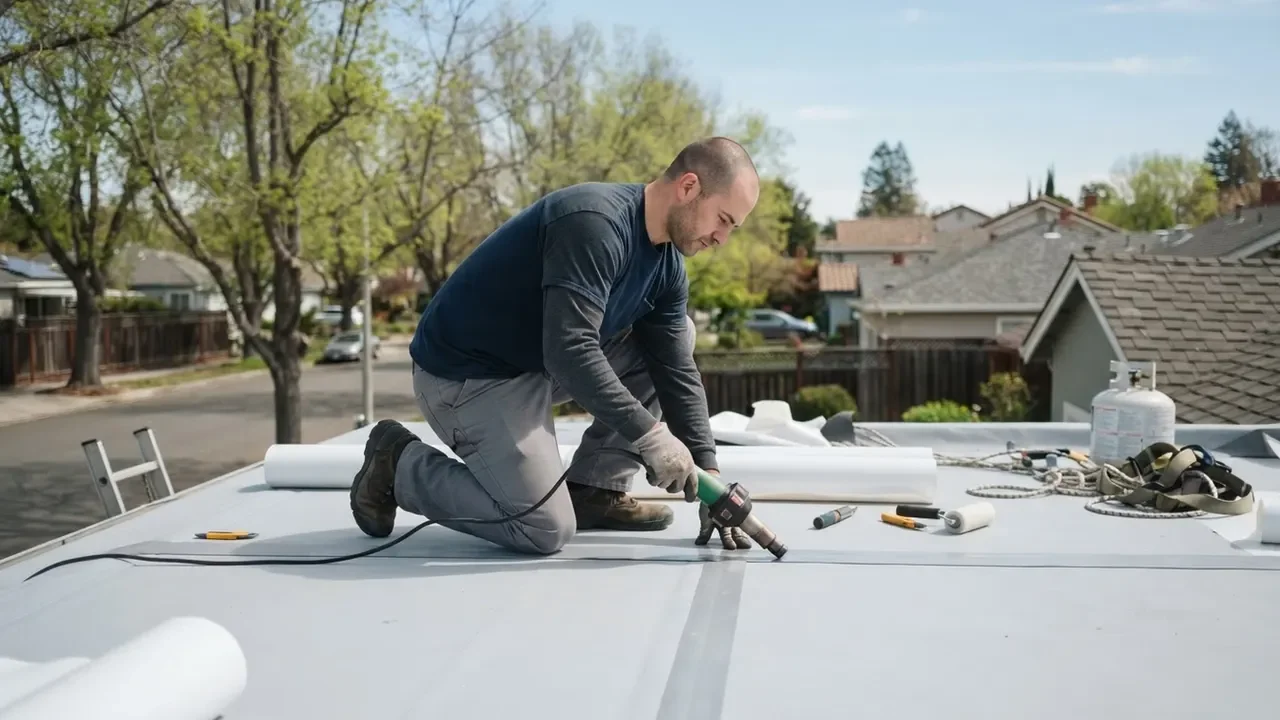
Shingle roof repair in Bay City, Texas helps homeowners stop active leaks, replace wind-lifted shingles, and protect roof decking before water spreads indoors. Bay City Roofing, TX repairs asphalt and architectural shingles with attention to the roof's underlayment, valleys, and flashing. If you have a ceiling stain, loose shingle, or granules in the gutter, our local team can inspect the damage and explain the repair that fits your roof.
Useful updates and clear arrival timing.
Review the approach and price before deciding.
Equipped vehicles and respectful cleanup.
Neighbors serving neighbors with follow-through.
A standard repair covers inspection of the affected roof area, removal of damaged shingles, a check of the exposed underlayment and deck, and installation of compatible replacement material. We also check nearby flashing and clear repair debris from the work area. If inspection reveals widespread deterioration, extensive wet decking, or a separate drainage failure, we explain the additional work needed before proceeding.
We trace the reported leak or visible shingle damage across the relevant roof slope. The check includes nearby valleys, edges, and penetrations so we can identify whether water is entering through the shingle field, flashing, or another roof detail.
We lift and remove broken, missing, or badly curled shingles with care for the surrounding courses. Once the damaged pieces are off, we look at the exposed underlayment and roof deck for signs of moisture or deterioration before closing the area.
We install compatible asphalt shingles and fasten them to suit the roof layout and material. Correct alignment and secure attachment help the repair shed water with the surrounding courses instead of leaving a raised edge or exposed fastening point.
We inspect adjoining roof flashing, valley edges, and shingle tabs for related failures. If a nearby component contributed to the leak, we explain the finding and the repair needed so the water source is not left active beside the new shingles.
We collect loose shingle pieces and roofing debris after the repair, then review the completed area with you. You will know which part of the roof was repaired and what signs to watch for after the next rainfall.
Share what is happening and receive a clear next step from the local team.
Shingle roof repair in Bay City, Texas is a roof restoration service that replaces damaged shingles and corrects the leak paths or fastening failures that let water reach the roof deck. We inspect the affected slope, lift surrounding shingles with a shingle ripper or pry bar, and check roof underlayment, roof flashing, and nearby fasteners. Then we install compatible replacement shingles, seal exposed details where appropriate, and check the repair against adjacent courses. A patch that only covers a stain can miss the entry point, so we trace water paths before closing the roof.
Bay City homes face driving rain, gusts that lift shingle edges, and humid conditions that can keep roof materials damp after a storm. Our asphalt shingle repair Bay City TX service addresses missing shingles, curling shingles, granule loss, and flashing failure before a small opening damages sheathing or insulation. If you are searching for shingle roof repair cost in Bay City, Texas, the price depends on access, roof pitch, material match, and whether the deck is sound. We check those factors on site and explain the repair plainly.
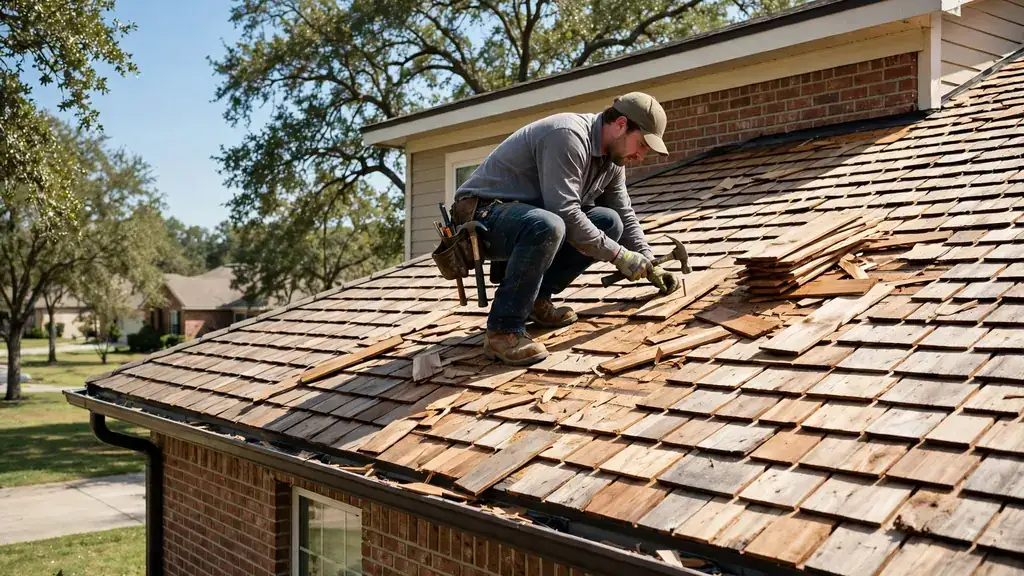
We begin with your report: where you see a stain, when it appears, and whether wind or rain preceded it. Our team checks the roof slope and interior clues, then identifies access needs. A straightforward repair visit often takes a few hours; a larger leak investigation takes longer if water has traveled beneath several courses.
We inspect the affected shingles, valleys, eaves, and penetrations, then look for damaged underlayment or roof decking where accessible. A moisture meter helps distinguish damp material from an old stain, while an infrared thermal camera can help locate temperature patterns associated with trapped moisture. We explain what the findings mean before starting.
We use an extension ladder and safety harness appropriate to the roof access, then protect the work area below. With a roofing hammer, pry bar, and utility knife, we remove damaged material without tearing sound shingles around it. If the deck is exposed, we check its condition before installing the replacement layers.
We fit replacement asphalt shingles to the roof's existing style and course layout, then fasten them securely and address related flashing or sealant details. A roofing nail gun or roofing hammer is selected for the repair conditions. We avoid covering a failed flashing joint with shingle sealant alone.
We review the repaired area for alignment, fastening, and exposed edges, then remove loose nails and debris from the work zone. After the repair, we tell you what was corrected and whether surrounding shingles show wear. You can call us if a new stain appears after the next rainfall.
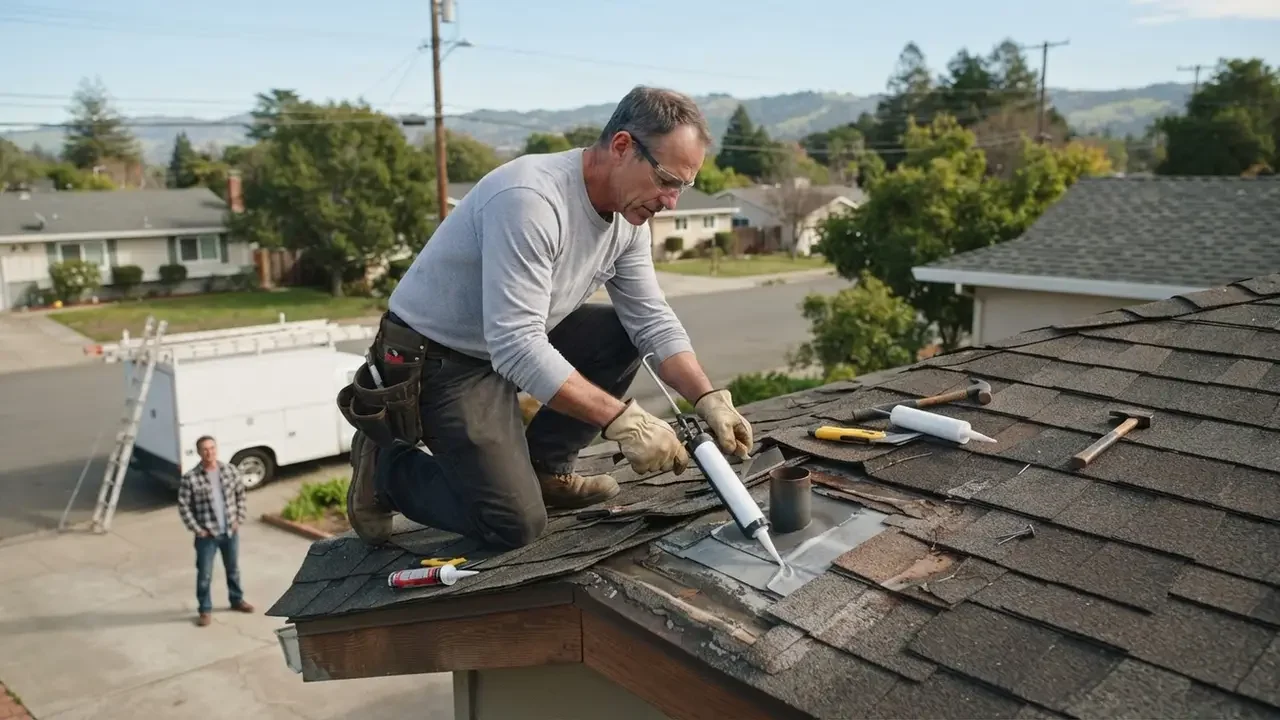
We slide the shingle ripper beneath damaged tabs to release fasteners and remove a failed piece while limiting disturbance to surrounding courses.
A roofing hammer helps remove old fasteners and set replacement nails where careful hand placement is preferable to powered fastening.
We use a moisture meter to check accessible wood around a reported leak and distinguish damp materials from a surface stain.
A safety harness supports controlled work on sloped roof areas when access and site conditions call for fall protection.
An infrared thermal camera can help identify temperature patterns around suspected moisture areas, guiding closer inspection rather than replacing direct roof checks.
We start with the indoor symptom and inspect the roof features above and upslope from it. Water can move along decking, rafters, or underlayment before it reaches a ceiling. Tracing the path keeps the repair focused on the entry point instead of the place where the stain finally appears.
We remove failed shingles without cutting into sound courses, check the exposed surface, and fit replacement material to the existing exposure and profile. Fasteners are placed so the repaired section lies flat and sheds water with the roof. We check the surrounding tabs before calling the repair complete.
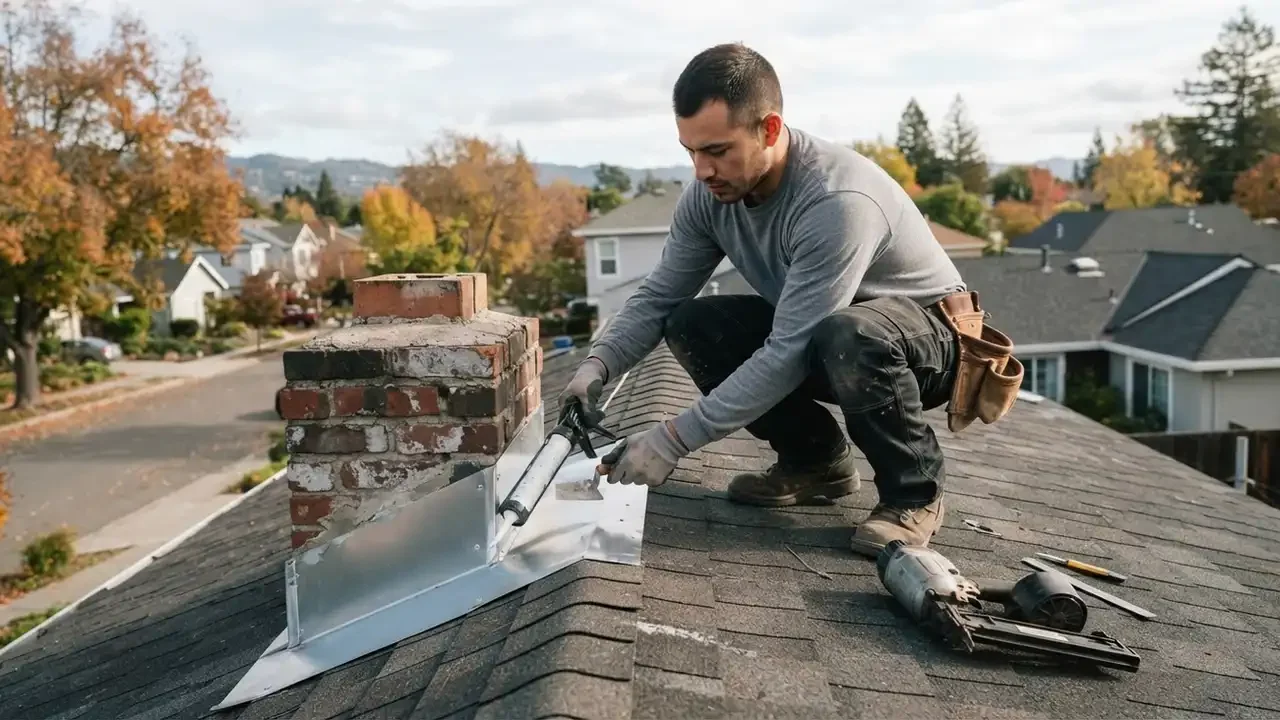
When shingles appear intact, we examine roof flashing at chimneys, skylights, vents, and wall transitions. Flashing failures often create leaks that resemble shingle damage. We repair the joint that failed and replace any shingles disturbed or damaged during that work.
After installation, we inspect alignment, exposed edges, fastening, and the nearby water-shedding path. We clear loose debris and review the repaired area with you. This final check helps catch a raised tab or missed transition before the crew leaves the roof.
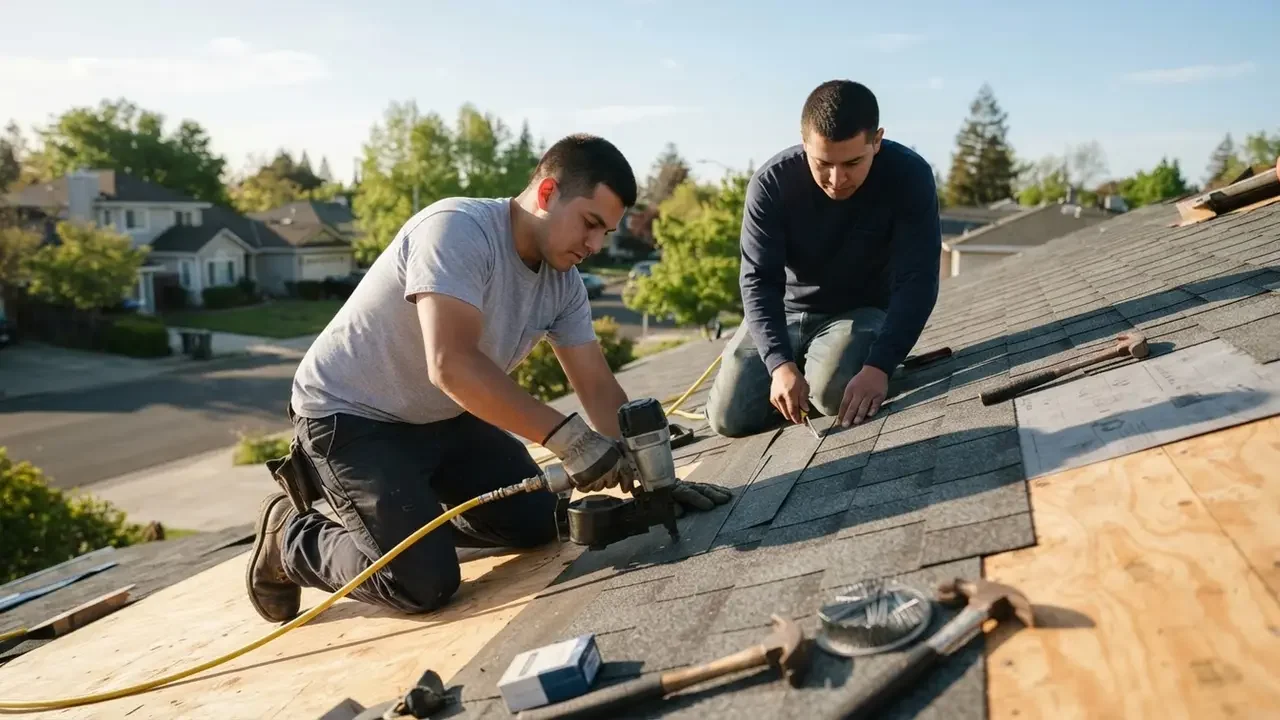
We inspect the roof opening, check the underlayment and decking, then replace the missing shingles and secure nearby loose tabs. If water is actively entering, we prioritize protection of the exposed area and complete the permanent repair when conditions are safe. The roof surface is closed at the damaged section, and you know whether the storm affected only shingles or deeper materials.
We inspect chimney flashing, the upslope shingle courses, and the interior area for moisture clues. We repair the failed transition and any damaged shingles, rather than sealing the ceiling stain or applying sealant over the entire roof joint. The water entry point is corrected, and the repair targets the source even if the stain appeared several feet away.
We examine whether the wear is limited to one roof section or repeated across multiple slopes. We replace isolated failures and check drainage at the eaves. If deterioration is widespread, we discuss the roof's overall condition alongside the repair needs. You get a practical distinction between a localized repair and a roof nearing broader material failure.
We inspect the skylight flashing and the shingles around the opening, then trace whether water entered at the unit or traveled from a nearby roof feature. We repair the failed junction and check surrounding underlayment for moisture. The repair addresses the actual leak path and reduces the chance of water continuing behind the skylight trim.
Bay City's humid conditions and periods of driving rain make small roof openings worth addressing promptly. Wind can lift shingle edges, while repeated wetting can expose weak points around valleys, chimney flashing, and skylights. In November, we prepare for cooler, wetter conditions by checking whether roof surfaces are dry enough for safe repair and whether earlier storm damage has left underlayment exposed. We do not install shingles on a wet or unsafe surface. Our Bay City, Texas shingle roofing repair begins with the roof type, slope, and leak location. Homes with additions or mixed materials need careful attention at the junction between shingles and low-slope roofing. We inspect the drainage path and roof edges, since clogged gutters can keep water against the eaves and contribute to fascia damage. For an asphalt shingle leak repair in Downtown Bay City TX, we check both the visible opening and nearby flashing before choosing the repair. We follow applicable local requirements and manufacturer installation guidance, and we explain any condition that changes the work. Call us if a stain grows, shingles go missing, or water appears after wind-driven rain.
Older roof sections and later additions can meet at uneven transitions. We inspect those junctions, valleys, and flashing when tracing a leak in Downtown Bay City.
Wind-driven rain can test shingle edges and roof penetrations. We check lifted tabs and flashing details before replacing only the visible damaged pieces.
Homes with more than one roof age or material need a repair matched to the affected slope. We check adjacent courses and drainage before closing the roof.
After a storm, we inspect missing shingles, granule loss, and exposed underlayment, then confirm whether the damage is limited to one section.
We check the repair area before installation because shingles and underlayment must be handled on a suitable surface. Damp decking also changes how we assess a leak, especially when a ceiling stain has remained visible for several days.
A shingle may look present but have a lifted edge or failed bond that lets water beneath it. We inspect adjacent courses and flashing so the repair does not leave a second opening beside the replacement.
Water that cannot drain freely can affect the roof edge, fascia, and soffit. During a shingle repair, we check whether gutter blockage or a downspout problem contributes to the reported leak and explain the related drainage issue.
A homeowner found three missing shingles above a bedroom after a night of gusty weather. Rain reached the attic and left a small ceiling stain, while the exposed roof felt vulnerable to the next storm. The surrounding shingle field looked mostly intact, but the underlayment and nearby tabs had not yet been checked.
We removed damaged material, checked the exposed deck and underlayment, and installed three compatible replacement shingles. We also secured two nearby tabs that had lifted. The repair covered the opening and the homeowner reported no new water stain after two subsequent rain events.
Maintenance: Check the ceiling and attic after heavy rain, and look for new granules or lifted shingle edges from the ground. Keep gutters clear so runoff does not back up at the repaired eave.
Water appeared on an upstairs wall several feet from the chimney, making the entry point difficult to identify. The shingles looked serviceable from the ground, but the flashing joint and upslope courses were not visible. Each rainfall added moisture to the same interior area.
We traced the leak to a failed chimney flashing transition and replaced damaged flashing details and four adjacent shingles. The work addressed the roof entry point rather than the wall stain. The homeowner saw no additional water after the next heavy rainfall and had a clear description of the repair.
Maintenance: Watch for fresh staining around the chimney and check the attic after prolonged rain. Keep nearby gutters clear and report any lifted shingle edges before water reaches interior finishes.
A Bay City homeowner noticed curled corners on one slope and a growing amount of granule material in a downspout. A few shingles had exposed dark patches, while the rest of the roof was still shedding water. The concern was whether the whole roof needed replacement.
We inspected the slope and found seven shingles with significant wear, while surrounding courses remained serviceable. We replaced the affected pieces and checked the eave drainage. The homeowner received a localized repair and a clear explanation of the roof areas that should be monitored.
Maintenance: Clear gutters at least twice a year and check the roof after severe weather. If bald patches, repeated curling, or new leaks appear, arrange an inspection before damage spreads to the deck.
A small defect can allow repeated water entry even when most of the roof looks sound. We locate the failure, repair the affected materials, and check nearby roof details so you understand both the immediate fix and the condition around it.
Exposed underlayment can tear or let rain reach the roof deck, insulation, and ceiling. The next storm can enlarge the opening and spread the stain. We inspect the affected slope and the edges around each missing shingle, then check whether the underlayment remains intact. We install compatible replacements and secure adjacent tabs that have lifted. If the deck is wet or damaged, we identify that area before covering it so the repair addresses the full opening.
Water may travel along framing or decking from failed flashing or a valley before appearing indoors. Repainting the stain will not stop the leak. We compare the interior stain location with roof features above it, including valleys, vents, and chimney flashing. After tracing the water path, we repair the entry point and the affected shingles or flashing. We also check moisture conditions around the opening to see whether water remains trapped.
Raised edges catch wind and make it easier for rain to move beneath the shingle course. Nearby pieces can become brittle or lose granules as wear spreads. We assess the extent of curling, the condition of adjacent shingles, and the ventilation and fastening around the affected area. For a localized failure, we replace the damaged section. If the same wear covers broad areas, we explain whether repeated spot repairs remain practical.
Heavy granule loss can expose asphalt to faster wear, while a blocked gutter can hold debris against the roof edge. Ignoring either issue can lead to leaks. We inspect the shingle surface for bald spots or impact marks and check the gutter path for concentrated runoff. We replace shingles with significant damage and clear or address related roof-edge problems. The inspection separates ordinary loose granules from damage that needs repair.
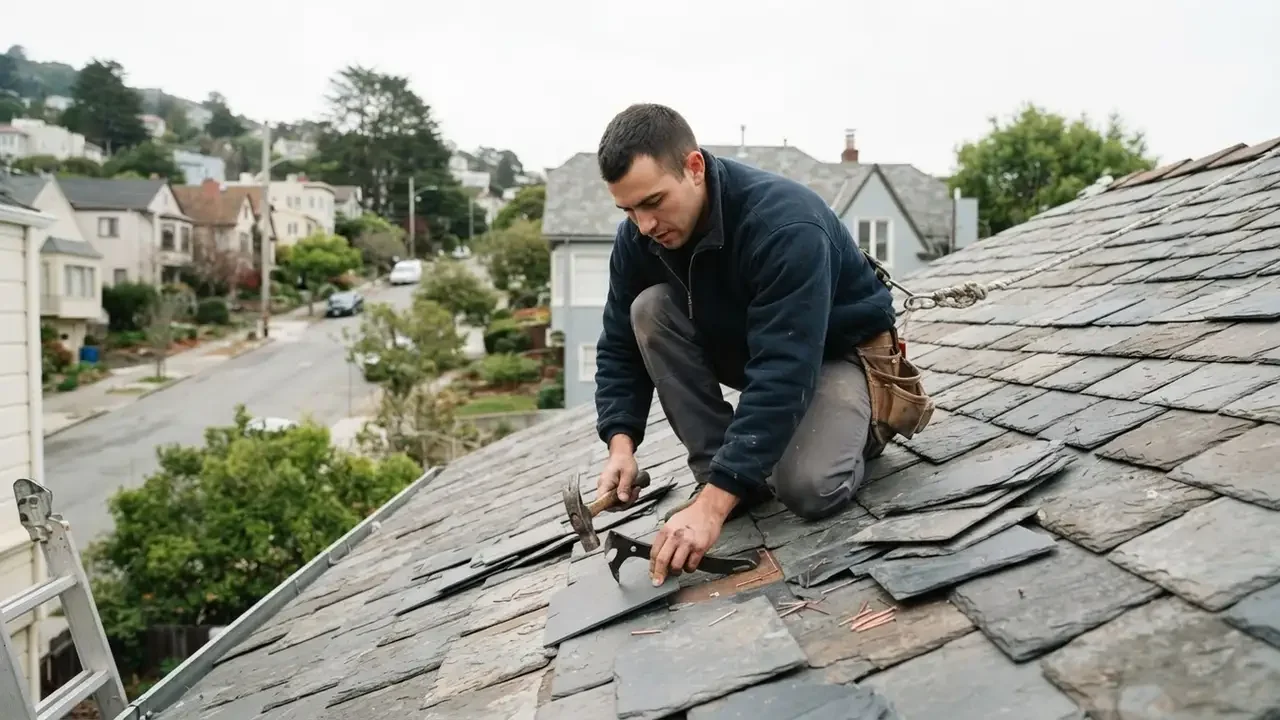
Shingle repairs demand more than replacing the pieces you can see. Our team checks how water moves through valleys, around chimneys, and beneath lifted tabs, then matches the repair to the roof assembly. We work with asphalt shingles and architectural shingles and understand how product profile, exposure, and fastening affect the finished course. Bay City Roofing, TX brings local experience to storm-related calls and routine leak repairs. We explain the condition we find and complete the repair with attention to the surrounding roof, not just the damaged spot.
After a windy night, two shingles were missing above our bedroom and a small ceiling mark appeared. The crew checked the roof above the stain, replaced the damaged shingles, and showed me where the flashing was sound. The repair took a few hours, and the work area was clear when they finished. We have had no new leak after several rainy days.
We kept finding grit in the gutter and noticed one corner of the roof curling. Bay City Roofing checked the slope, replaced the brittle shingles, and looked over the nearby valley instead of just patching the visible spot. They explained what they found in plain terms. The roof looks even again, and the ceiling stain has stayed dry.
Rain was getting in around the area near our chimney, and the water mark showed up on an upstairs wall. The team traced it to the roof joint, repaired the flashing and adjacent shingles, then cleaned up the loose material. They explained why the leak had traveled away from the entry point. The next heavy rain passed without another stain.
Small shingle repairs commonly cost $180 to $450, while larger repairs with flashing or deck work can run $450 to $1,500 or more. Typical 2026 pricing in Bay City depends on roof height, pitch, access, shingle match, and hidden damage. We inspect the affected area and explain the price before work begins. Replacing a few accessible shingles costs less than repairing wet decking or a valley leak.
Many asphalt shingle roofs last about 20 to 30 years, while product, ventilation, installation, and storm exposure affect the actual lifespan. Architectural shingles can have different ratings from basic three-tab products, but those ratings are not a guarantee for every roof. We check granule loss, curling, exposed fasteners, and brittle tabs to judge the roof's current condition rather than relying on age alone.
Yes, we can replace a few damaged shingles when the surrounding roof and underlayment remain sound. A localized repair often takes two to four hours, depending on access and roof pitch. We lift the affected course carefully, check the exposed area, and secure compatible replacements. If water has damaged the deck or similar failures cover a broad section, we explain why a larger repair is needed.
Granules can shed as shingles age, after hail impact, or when runoff concentrates in a valley or clogged gutter. A small amount of loose granule material is not enough by itself to diagnose a roof failure, but bald patches and exposed asphalt need inspection. We check the shingle surface, drainage path, and nearby flashing, then tell you whether a few shingles need replacement or the wear is widespread.
Not seeing your question? Our local team can help you understand urgency, scheduling and what to expect.
Ask the local team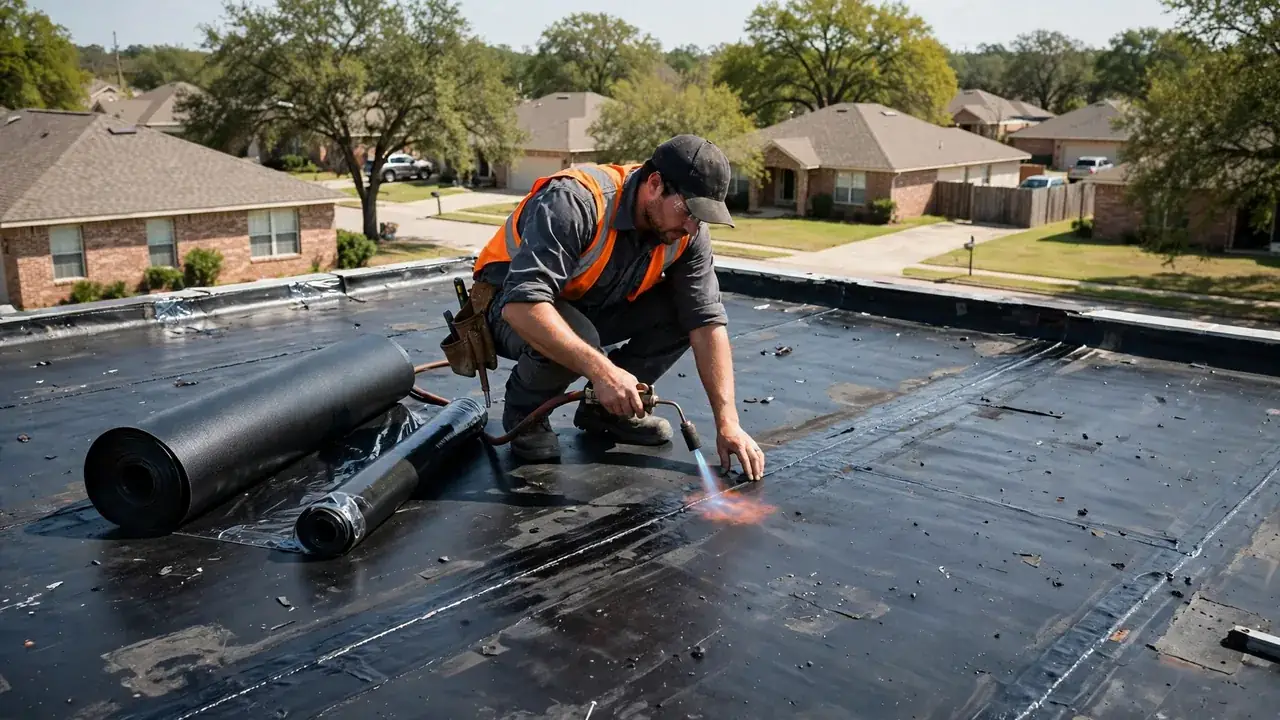
Roof Repair covers damage beyond the shingle field, including roof flashing, vents, and other roof components. If your Bay City home has multiple leak points or mixed materials, we inspect the system and connect shingle work with the repairs needed to restore drainage and weather protection.
View serviceRoof Replacement is worth discussing when shingles are failing across several slopes or the roof deck needs extensive work. We compare the condition of your existing roof with localized repair needs, so you can understand whether replacing the roof is more practical than repeated patches.
View service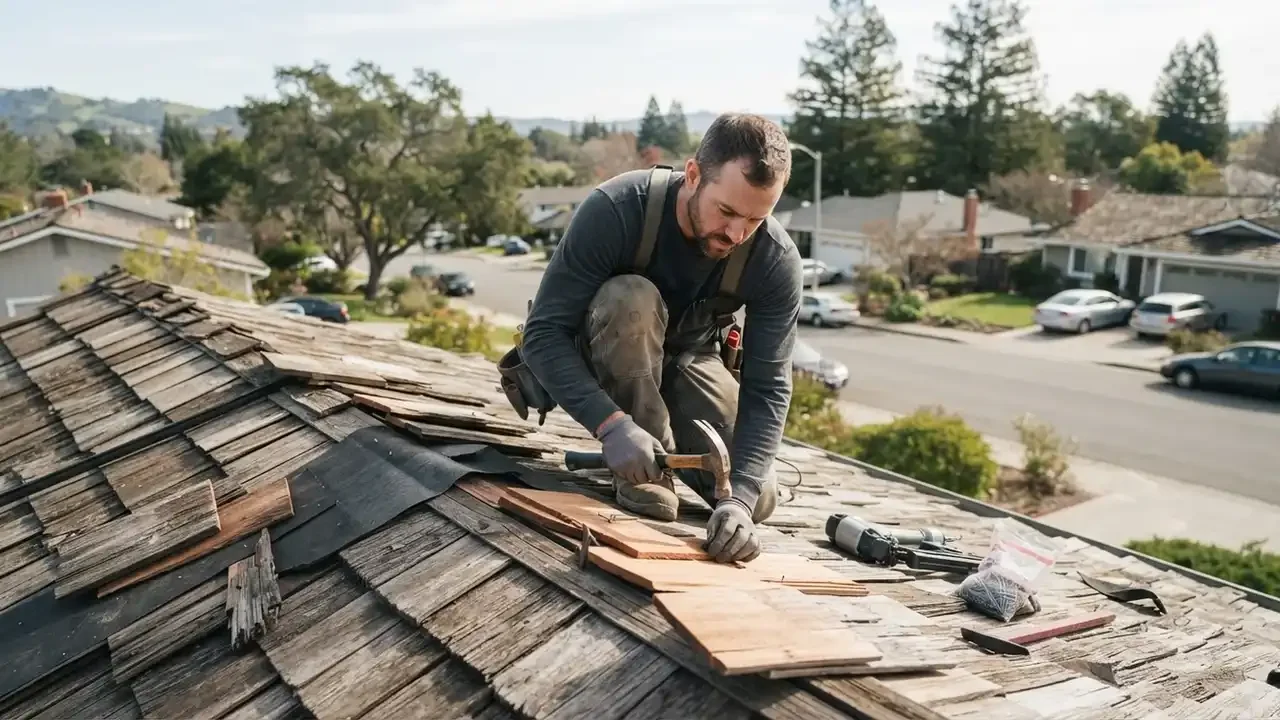
Roof Leak Repair follows water from an interior stain to its roof entry point. We check shingles, valleys, and flashing rather than sealing the ceiling mark. That service pairs naturally with shingle work when rainwater has reached an attic, wall, or ceiling in your Bay City property.
View serviceEmergency Roof Repair addresses active openings after wind or storm damage. We focus first on stopping water entry and protecting exposed roof sections, then complete permanent shingle repairs when conditions allow. Call if missing shingles leave your home vulnerable to another round of rain.
View service
Call (877) 791-3217 to discuss a roof leak, storm damage, inspection, or replacement in Bay City. We connect you with independent roofing companies and help you get the conversation started. Calls are accepted around the clock for urgent roofing needs; tell us whether water is actively entering and where you see the damage.